
mosaicos trío musicalis
Num. Cat: IBS62023 / DPL GR 679-2023
total time 63:56
Recording venue: Auditorio Manuel de Falla 27-29 May 2024
Music Producer: Paco Moya
Sound engineer: Cheluis Salmerón
Mixing & Mastering: Iberia Studio
Text: Eva Sandoval
Photography: Michal Novak
Illustrations and Design: Ion Fernandez de las Heras
Executive Producer: Gloria Medina
Hèctor Parra — Chiffres et constellations amoureux d’une femme
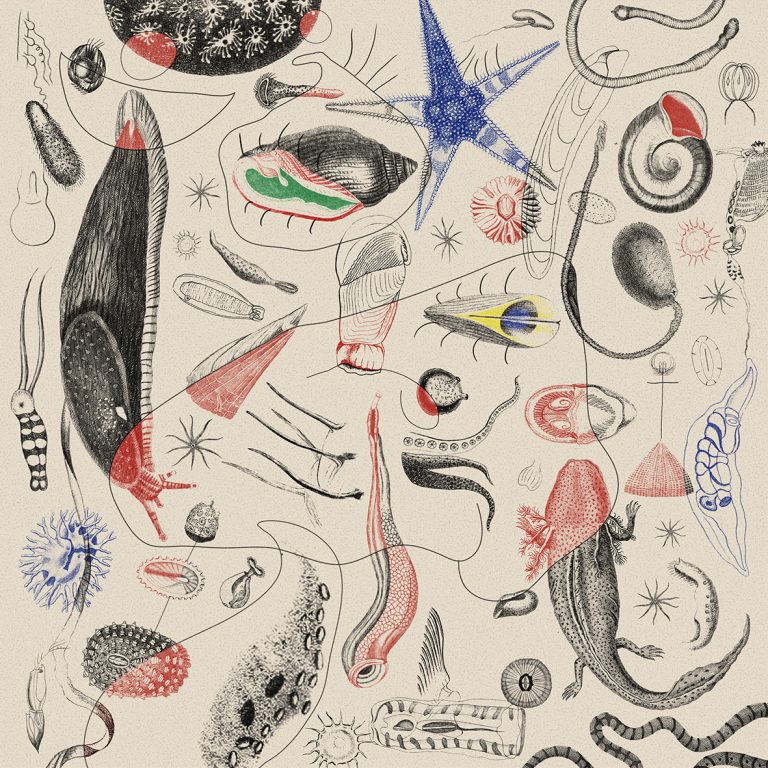
One of the constants in the catalog of the Catalan composer Hèctor Parra (Barcelona, 1976) is the search for inspiration in extramusical disciplines: from relativistic physics to plastic art. In this piece, dedicated to the Trío Musicalis and concluded in Paris in 2021, Parra merges with the Constellations (1940–1941) by Joan Miró —with whom he shares the French vital experience of 26 years— to «revive, through music, the creative impulse that inspired the Barcelona painter.» The work surprises with its lyricism and timbric experimentation: objects that struggle with unexplored piano sounds, techniques extended on the violin and air plays on the clarinet. We move between contemplative quiet and hysteria through the interaction between the three instruments, with two important passages to the solo of the violin and the bass clarinet.
Jesús Torres — Fulgor
Jesús Torres (Zaragoza, 1965), Premio Nacional de Música in 2012, wrote Fulgor in 2017 as an entrustment of the INAEM to celebrate the tenth anniversary of the Trío Musicalis, which performed on February 4, 2018 in the Auditorio Nacional of Madrid. The starting point was these verses by the poet José Ángel Valente: «And everything that exists in this hour / of absolute splendor / is abrased, burns / contigo, body, / in the burning mouth of the night.» Valente’s poetic essentialism has a musical correspondence in lyricism with which Torres treats each instrument. The piece is constructed in a single movement, divided into a series of episodes of incredible rhythmic pulsation, with a harmonic transparency that incorporates and revives strategies from the Middle Ages to the vanguards of the XX century.
José Luis Greco — Big Fun
The composer José Luis Greco (New York, 1953) began his career in the world of rock, jazz, theater and dance before settling in Madrid in 1994. This eclecticism and independence are shaped in a rich, vitalistic and multifaceted style. Big Fun , dedicated and performed by the Trio Musicalis on February 4, 2018, part of an initial «Swinging» with ostinato on the piano that is combined with extended techniques on violin and bass clarinet. From here, distinct cuts and silences mark the transitions of contrasting materials: the jazz virtuosity, the dreamlike atmospheres of the song «Ominous» and the ironic «Driving», with echoes of Debussy and Messiaen. An extensive poetic and passionate construction in which the past and the present are united.
Ramón Paús — El Huésped Cuántico
Ramón Paús (Castellón, 1959) part of a point of arranque cinematográfico cases: the physical physics and the possibility that there exist identical series to us on other planes in space-time. The Huésped Cuántico , completed in October 2020 and dedicated to the Trío, opens with a mystical «Largo» of clusters on the piano that establishes a nocturnal climate. In the next «Allegro», the 5/4 groove is recorded by Dave Brubeck while the lower violin and clarinet roll out unlimited combinations. The «Andante» draws messianic players on the clarinet and ethereal piano arpegios, as long as a multitude of septillos concludes the work with an «uncertain and delicate agitation in equal parts».
José María Sánchez-Verdú — Luz negra II (De máquina oscura)
The highest degree of timbric experimentation of the album is found in the work of José María Sánchez-Verdú (Cádiz, 1968), Premio Nacional de Música in 2003. Dedicated to the poet Francisco Deco and the Trío Musicalis, which was performed in Bilbao on 18 October 2021, it forms part of a cycle of camera pieces that reflect on the concept of «black light». The language of Sánchez-Verdú transcends the common area of the instrumental sound to enter the landscapes that we discover, going beyond the traditional territory of the music. As the author himself explains: «The essence is in the vibrations, frequently presented at distinct speeds, as if in the place of sounds it would be done by doing work based on the light.»
Mosaicos is a photograph of today’s Spanish musical creative activity. From the sonic exaltacion of Parra to the timbric exploration of Sánchez-Verdú, passing through the luminosity of Torres, the eclecticism of Greco and the lyricism of Paús, the Trío Musicalis brings to the granite of the arena the artistic history of our country, generating new and valuable repertoire for a formation as singular as the bass clarinet, violin and piano.
Illustrations: Ion Fernández de las Heras