
30 caprices felipe libón
Cat. No.: IBS172025 / GR 1224-2025
total time 68:56
Recording venue: Auditorio Manuel de Falla 27-29 May 2024
Music Producer: Paco Moya
Sound engineer: Cheluis Salmerón
Mixing & Mastering: Iberia Studio
Executive Producer: Gloria Medina
Photography: Raúl Marcos de Llanos
Design: NSN997
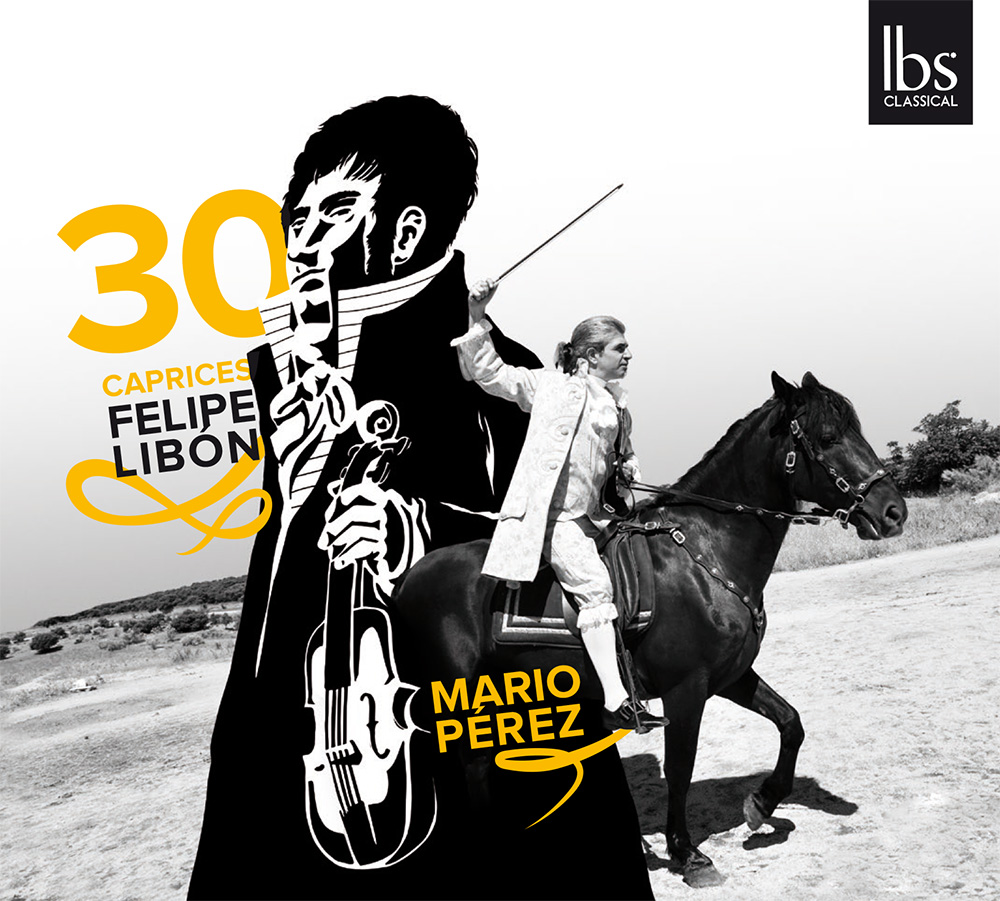
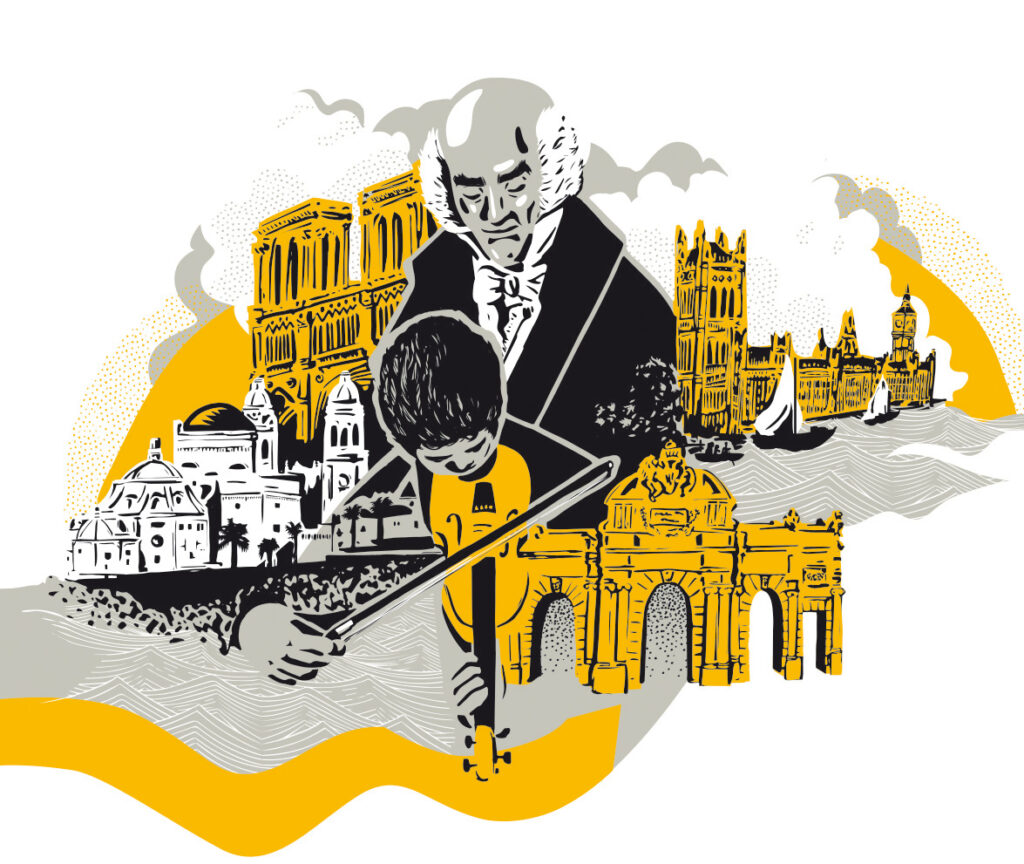
This project is a journey through time, an act of musical justice, and a reunion with a legacy that the silence of history kept hidden for centuries. Felipe Libón, born in Cádiz in 1775, is not merely a forgotten name in the margins of sheet music; he was a creative spirit who shone in the most important concert halls of London, Lisbon, Madrid, Milan, and Paris, but who, over time, was mistakenly stripped of his Spanish identity, even being catalogued as French. With this project, we not only rescue his music but return the composer to his homeland, to his essence, and to the place in history he deserves.
The research behind this work has been an intimate and revealing process. Libón was a violinist of cosmopolitan spirit, trained in London under the great Viotti, and a witness to a Europe in musical ferment. His 30 Caprices for solo violin, published in Milan in 1818, are far more than virtuoso studies; they form a technical and expressive diary, a bridge between the French violin school and the southern sensibility he carried within. Each caprice is its own world: some dazzle with passages of extreme speed, while others sing with a lyrical delicacy that moves through its purity and elegance.
So why did Libón remain in the shadows? The answer lies between the lines: in scattered archives, in period reviews that praised him while branding him a «foreigner,» in the absence of a narrative linking his achievements to his origins, and in the fact that he never wrote a violin treatise to accompany his 30 caprices, as his contemporaries Kreutzer, Baillot, and Rode did. This recording was born from the need to weave those loose threads back together. We reviewed documents from the court in Madrid, where he shone before Carlos IV; traced his steps through Lisbon, where he likely acquired the Stradivarius that would for a long time bear his name; and reconstructed his time in Paris, where, despite performing for Empress Josephine and later María Luisa, he was never fully accepted among the greats of his era. His story is also that of so many artists who, for not belonging to established circles, saw their talent fall into obscurity.
Recording these caprices was an unprecedented artistic and technical challenge. It wasn’t only about playing the notes, but about breathing in the pedagogical and expressive intent Libón infused into each one. These caprices were conceived as study material for his students, a method avant la lettre that combined concert-level virtuosity with deep instrumental instruction. They explore trills, tenths, sixths, and thirds, extreme position changes, chords, and a variety of bow strokes that demand not only precision but also an intimate musical understanding.
In delving into the interpretation of these caprices, I feel with deep clarity the echo of an open, cultured, mixed-heritage Cádiz — the same cultural crucible that gave birth to Felipe Libón in the eighteenth century. The city, a vital port where Enlightenment philosophy, liberal political debate, and artistic currents from across Europe converged, is reflected in the very essence of his music. This cosmopolitan heritage is not merely a backdrop but the lifeblood that nourishes his writing. In it I find an elegant formal clarity, characteristic of the strictest classicism, yet crossed by unexpected flashes of emotional freedom and an almost Romantic expressiveness that seems to whisper, from the last quarter of the eighteenth century, the profound aesthetic shifts that would define the century to come.
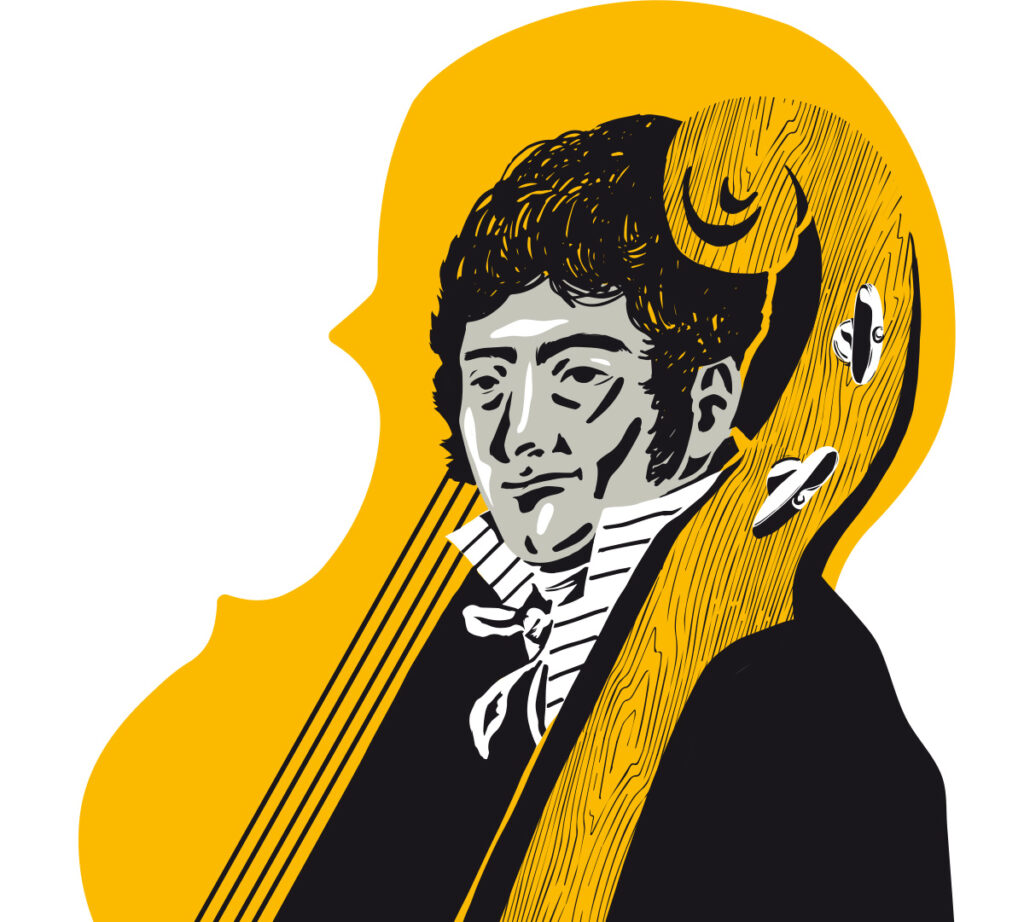
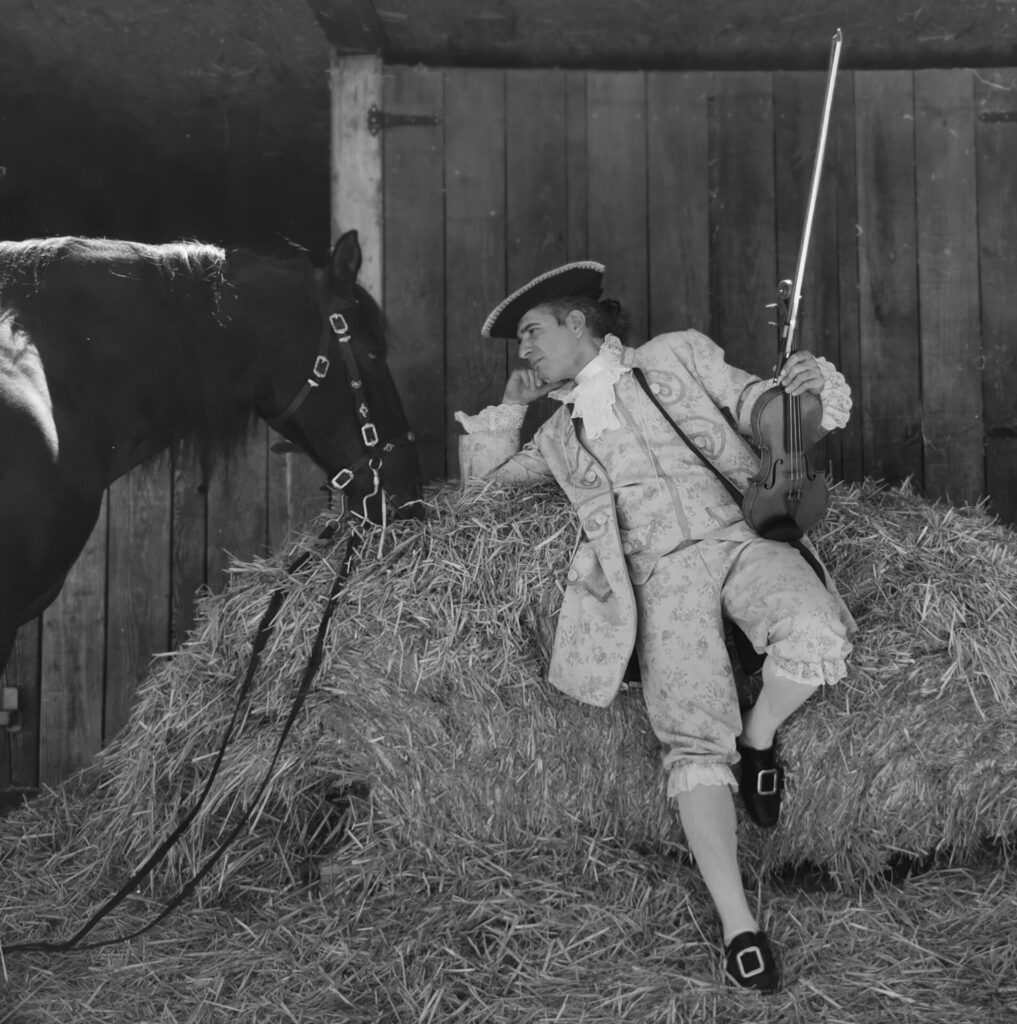
Recording them thus became something far deeper than a mere technical exercise; it was an intimate, personal dialogue across time. My purpose was twofold. First, to honor with the utmost respect the school of virtuosity in which Libón trained — that legacy of precision, elegance, and polished sound he received from Viotti — staying faithful to the original score and the rigor of its era. The second purpose, equally vital, was to reclaim and update his profound original pedagogical intent. These caprices were born as a method for training his students; my interpretation seeks to transform that historical lesson into a living, relevant resource for the twenty-first-century violinist. It is not just about executing the passages, but about illuminating their inner logic, making audible the technical and musical «why» behind each challenge, so that today’s students and professionals can find in them not only a challenge, but a path of growth. In this way, every phrase interweaves respect for the past with a vocation of usefulness for the present, restoring the bridge Libón built between art and teaching.
I felt there could be no better tribute than to bring this work to light now, on the 250th anniversary of his birth. This recording is, at its core, an act of musical justice: returning to the present a masterful creation that time had pushed aside, restoring Felipe Libón to the pedagogical and artistic reference point he always was.
This is not just about rescuing some scores, but about validating a legacy. About confirming, note by note, that his music has the technical solidity, expressive depth, and vital spark needed to engage in dialogue with today’s violinists, to enrich our repertoire, and to inspire those who listen.
My greatest hope is that, through this recording, Libón will finally take his rightful place in the history of Spanish music, and that his voice, now accessible to all, will find an echo and a conversation with new generations of performers and music lovers.